We are a group of artists working from Cluj and not from Cluj, often with families or without families.
Even if you don’t believe in magic, there can be moments when a child seems to come oddly close to something that resembles it. Completely non-metaphysical, and yet a vector of such overwhelming complexity that it cannot be defined, but at the same time so alive that it is hard to grasp both its limits and the way it is not separate from one’s own hopes, pleasures, fears, vulnerabilities, histories and powers. Perhaps the mosquito that bites and the squirrel that flies can share the same iridescence.
It is possible that fragmentation, multiplicity, the lack of a purpose, ambiguity and suspension can create an open environment in which more-than-ness can show itself in a way that makes possibilities appear that would otherwise have been unthinkable.
Sometimes things slip out of the categories we put them in. A stone can be a geological object, building material, the trace of a vanished life, a beautiful thing, an obstacle, a toy, or none of these. Categories help us find our way. Sometimes they also stop us from seeing.
Children are people who see different things than we do. Sometimes we try to build situations in which adults can find this out.
We don’t know in advance what should happen. If we already knew, the situation would become just a method for carrying out an idea. We leave room for people, places, things and events to change what we started.
Some things are worth doing even though they don’t lead anywhere. Not all time has to be used, every talent developed, or every experience turned into something useful.
Sometimes it is enough for several people to pay attention to the same thing. Especially if they think differently.
Often we don’t know what stays. Maybe a question, an image, a fear, an idea, a stone in a pocket, or a story told at home in the evening. Sometimes nothing stays.
We can reach different conclusions, or miss a conclusion altogether. Sometimes it is more interesting to stay for a while near a question that everyone sees differently.
By the way, you don’t need to know in advance how to behave here. You can come closer or stay at the edge, ask, change your mind, not understand, leave and come back. We try to make room for people as they are, and also for things that don’t yet know what they will become.
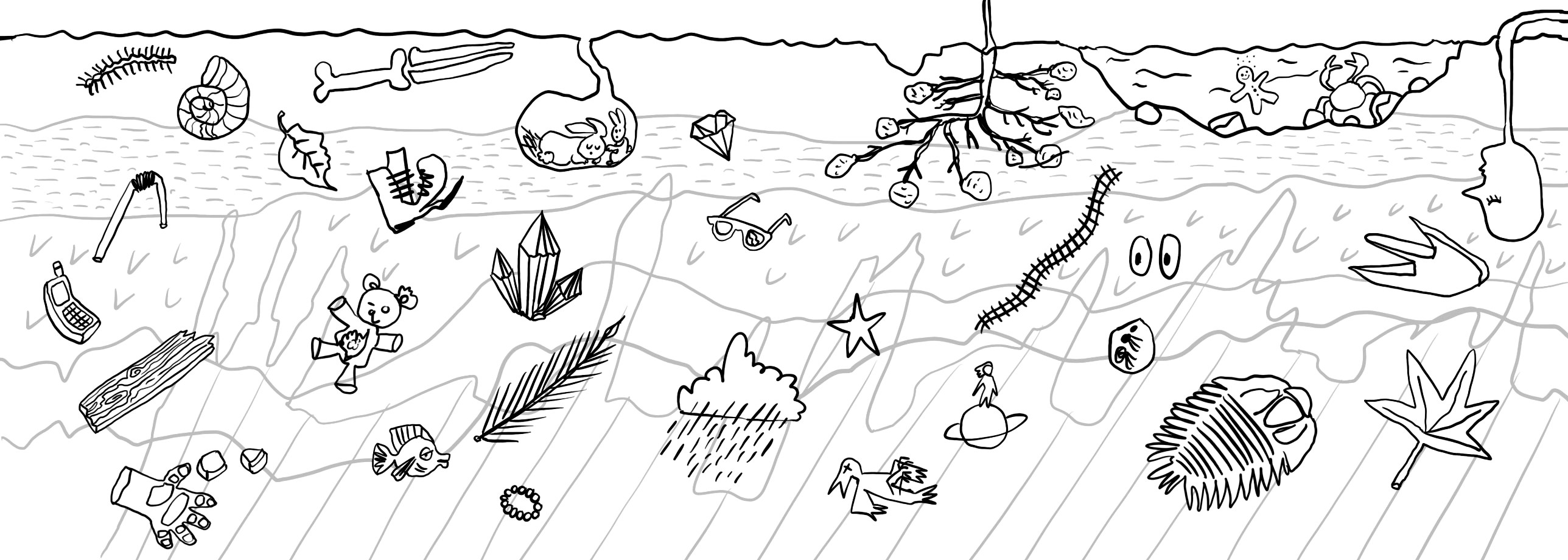
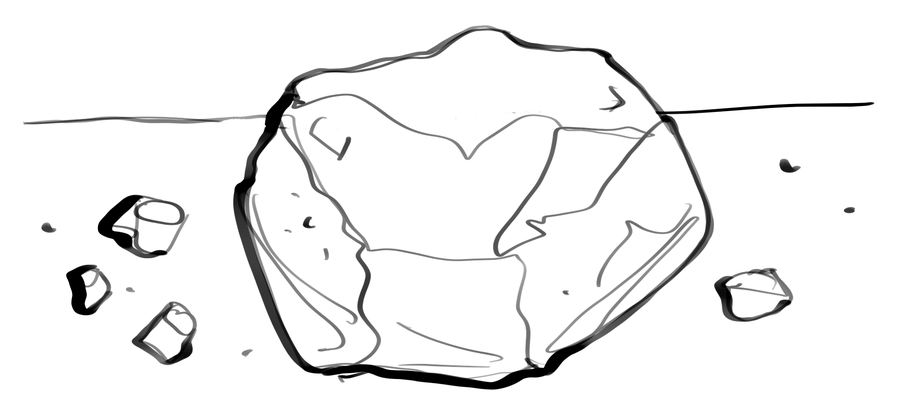
Our human way of perceiving and conceiving is new on this planet. But the ground we stand on is old. In many places, the stone under the forest is older than the first blade of grass, and a fossil is stranger than most invented monsters.
Wherever we go, we take our mind with us. A mind shaped by culture through what we think, but also built for narrow ways of perceiving. That is how we end up standing next to a tree and still being very far from it. And from ourselves, from other people.
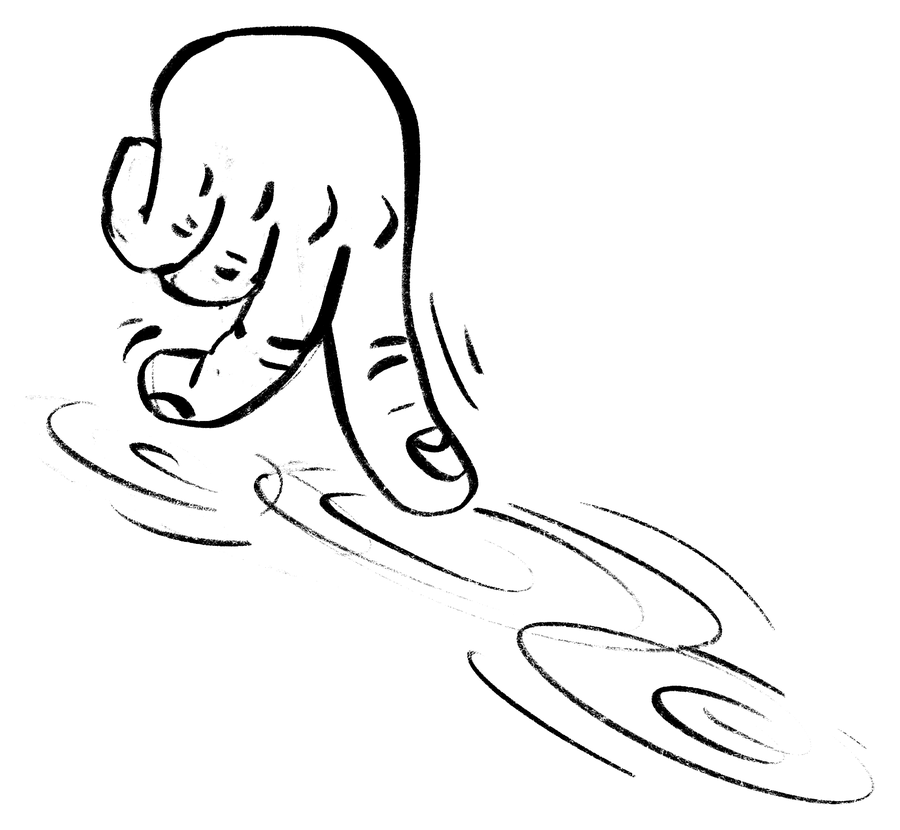
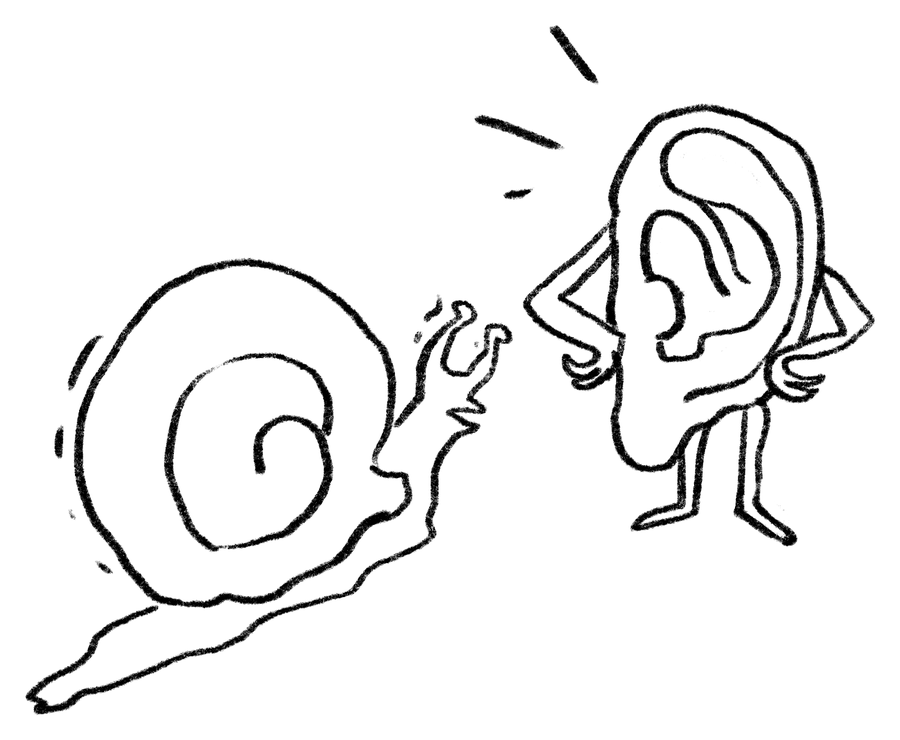
A child raised among tools learns to ask what things are for. A child raised in bureaucracy learns to ask what the rules are. But a child who grows up among people who open themselves to the unpredictable.
The situations we build are experiments in which we try to look beyond the limits that make us up and that we take for granted. We practise something that comes before the limits: uite.
We design conditions, indifferent to results. A situation means a place, something real, something invented and enough freedom of movement; what happens belongs to those who are there. We pay attention to small things: what people noticed, what surprised them, what they took with them, what the children tell their parents on the way home.
We go outside into the open air, but also outside the roles we usually bring with us: consumer, tourist, pupil or spectator.
This is a shared effort, or it is nothing.
We try to slip past the economic-ideological patterns that present themselves as inevitable reality today. We try to talk about what we do without marketing, but we are realistic and we make compromises. This website is one of them.
Didn’t understand a thing?